|
Researching
World War II
Unit
Histories, Documents
Monographs, Books and Reports on CD
PDF Remastered and Keyword Searchable
|
|
|
|
28th Infantry
"Keystone"
Division |
|
| Order
of Battle
|
109th Infantry
Regiment
110th Infantry Regiment
112th Infantry Regiment
28th Reconnaissance
Troop (Mech.)
103d Engineer Combat Battalion
103d Medical Battalion
28th Division Artillery
107th Field
Artillery Battalion (105 Howitzer)
108th Field Artillery Battalion
(155 Howitzer)
109th Field Artillery Battalion
(105 Howitzer)
229th Field Artillery Battalion
(105 Howitzer)
Special Troops
728th Ordnance
Light Maintenance Company
28th Quartermaster Company
28th Signal Company
Military Police Platoon
Headquarters Company
Band
| Activated:
|
17
Feb 1941 |
| Overseas:
|
8
Oct 1943 |
| Returned
to U.S.: |
2
Aug 1945 |
| Inactivated:
|
13
Dec 1945 |
| |
|
| Days
of Combat: |
196
|
| Casualties: |
16,762 |
Commanders
| Maj.
Gen. Edward Martin
|
Feb
- Dec 1941 |
| Maj.
Gen. J. Garsche Ord
|
Jan - May 1942 |
| Maj.
Gen. Omar N. Bradley
|
Jun
1942 - Jan 1943 |
| Maj.
Gen. Lloyd D. Brown
|
Jan
1943 - Jul 1944 |
| Maj.
Gen. Norman D. Cota |
Aug
1944 to inactivation |
Campaigns
|
Normandy |
6 Jun - 24 Jul 44 |
|
North
France |
25 Jul - 14 Sep
44 |
|
Rhineland |
15
Sep 44 - 21 Mar
45 |
|
Ardennes-Alsace |
16
Dec 44 - 25 Jan
45 |
|
Central
Europe |
22
Mar - 11 May 45 |
|
Medals |
| Medal
of Honor |
1 |
| Distinguished
Service Cross |
29 |
| Distinguished
Service Medal |
1 |
| Silver
Star |
435
|
Legionaires
Medal
|
27 |
| Soldiers
Medal |
21 |
| Bronze
Star Medal |
2,312 |
| AM |
100 |
Decorations
| Presidential
Unit Citation
Streamer embroidered
LUXEMBOURG
French Croix de
Guerre with Palm
Streamer embroidered
COLMAR
Luxembourg Croix
de Guerre
Streamer embroidered
LUXEMBOURG
Headquarters Company
(Scranton)
1st Battalion, additionally
entitled to
Meritorious Unit
Commendation,
Streamer embroidered
EUROPEAN THEATER
|
Medal
of Honor
Technical
Sergeant Francis
J. Clark
109th Infantry Regiment
|
|
|
|

| 1941 |
|
| 17
Feb- |
The division
was activated at Camp Livingston,
Louisiana. |
1942 |
|
17
Feb- |
The division
was reorganized and redesignated
as Headquarters, 28th Infantry
Division, the brigades were disbanded,
and the 111th Infantry Regiment
was detached and reorganized as
a separate regimental combat team,
initially used to guard important
Eastern Seaboard industrial facilities.
|
1943 |
|
8
Oct- |
The division
trained in the Carolinas, Virginia,
Louisiana, Texas, and Florida
and went overseas on 8 October
1943, arriving in South Wales.
Having conducted specialized combat
training in everything from offensive
maneuvers in mountainous terrain
to amphibious warfare, the Division's
intensive training agenda culminated
in its deployment to England.
|
1944 |
|
22
Jul- |
After another
10 months of training in England
and Wales, the first elements
of the Division entered combat
on July 22, 1944, landing on
the beaches of Normandy.
|
28
Jul- |
From Normandy,
the 28th advanced across western
France, finding itself in the
thick of hedgerow fighting through
towns such as Percy, Montbray,
Montguoray, Gathemo and St. Sever
de Calvados by the end of July
1944. |
29
Aug- |
The 28th pushed
east towards Paris. In little
more than a month after landing
at the Normandy beachhead, the
men of the 28th entered Paris
and were given the honor of
marching down the Champs-Elysées
on 29 August 1944 in the hastily
arranged Liberation of Paris.
The advance
continued through the Forest
of Compeigne, La Fere, St. Quentin,
Laon, Rethel, Sedan, Mezieres,
Bouillon and eventually across
the Meuse River into Belgium.
The Keystone soldiers averaged
17 miles a day against the resistance
of German "battle groups."
The city of Arlon, Belgium,
fell to a task force as the
Division fanned out into Luxembourg
in early September. |
11
Sep- |
A small night
patrol of the 109th Infantry Regiment
began the division's protracted
struggle on the Siegfried Line
on the Dragon's teeth fortification
infested Westwall. The patrol
crossed the Our River by bridge
from Weiswampach, Luxembourg into
Sevenig, Germany, making it the
first of the Allied armies to
reach German soil. |
12
Sep- |
The 109th began
hammering at the Siegfried Line,
destroying pillboxes and other
fortifications. |
1
Oct- |
The 109th moved
north to Elsenborn, then returned
on the 6th for patrols and rotation
of troops. |
2
Nov- |
Attacks in the
forest began November 2, 1944.
The 28th Infantry Division stormed
into Vossenack, Kommerscheidt
and Schmidt amid savage fighting
and heavy losses. |
10
Nov- |
The 28th began
to move south, where it held
a 25-mile sector of the front
line along the Our River. |
19
Nov- |
The Division
moved south to hold a 25-mile
sector along the Our River in
Luxembourg. |
31
Nov- |
A tenuous line
along the Our and Sauer Rivers
was held at the end of November, |
16
Dec- |
Two Panzer divisions,
three infantry divisions and one
parachute division, including
352nd Infantry Division and the
5th Parachute Division, in an
infantry-tank attack on the "Ridge
Road" just west of the Our
River. |
16
Dec- |
The Rundstedt
offensive was launched in Belgium
along the entire Division front.
|
22
Dec- |
The 28th fought
in place using all available personnel
and threw off the enemy timetable
before withdrawing to Neufchâteau
on 22 December for reorganization,
as its units had been badly mauled.
|
1945 |
|
Jan- |
By January 1945,
Division soldiers had moved south
where they served with the French
First Army in the reduction of
the "Colmar Pocket."
The 109th Infantry Regiment was
awarded the French Croix de Guerre
for its action which helped lead
to the liberation of Colmar, the
last major French city in German
hands. |
2
Jan- |
The Division
moved to a defensive position
along the Meuse River from Givet
to Verdun on, then to a patrol
of the Vosges Mountains on 17
February. |
1
Feb- |
From 1 to 5 February,
the division participated in the
reduction of the Colmar Pocket. |
6
Feb- |
The division
crossed the Rhône–Rhine Canal.
|
23
Feb- |
The Division
returned north to the American
First Army. |
6
Mar- |
The 28th was
in position along the Olef River
when an attack was launched on
March 6, 1945, carrying the Division
to the Ahr River. Schleiden, Germund,
Kall, Sotenich, Sistig and Blankenheim
all fell in a raid advance. |
6
Mar- |
After an attack
toward the Ahr River, the 28th
engaged in training, rehabilitation,
and holding defensive positions.
|
7
Apr- |
Beginning on
7 April the division performed
occupation duties at Juelich and
Kaiserslautern until it left France. |
Apr-
|
By early April,
the Division moved west of the
Rhine and took up occupation duties
in the area north of Aachen along
the Holland-German border. Permanent
occupation came two weeks later
at the Saurland and Rhonish areas.
|
Jul-
|
In early July
1945, the 28th began its redeployment
to the U.S. The Division was deactivated. |
|
|
| |
28th
Infantry Division
in World War II
CD
1
Open all files from
the folders on the CDs
Install Adobe Acrobat PDF Reader
from CD 1 |
|
|
|
| |
28th
Infantry
"Keyhole"
Division
|
|
28th Infantry Division
History
|
The division was activated on 17
February 1941 at Camp Livingston,
Louisiana. Lineage data gives the
same date, but as the date the HHD
28th Division, was inducted into
federal service 17 February 1941
at Harrisburg and Philadelphia.
It was reorganized and redesignated
on 17 February 1942 as Headquarters,
28th Infantry Division. That same
month the division was reorganized,
the brigades were disbanded, and
the 111th Infantry Regiment was
detached and reorganized as a separate
regimental combat team, initially
used to guard important Eastern
Seaboard industrial facilities.
The division trained in the Carolinas,
Virginia, Louisiana, Texas, and
Florida. It went overseas on 8 October
1943, arriving in South Wales.
Having
conducted specialized combat training
in everything from offensive maneuvers
in mountainous terrain to amphibious
warfare, the Division's intensive
training agenda culminated in its
deployment to England. After another
10 months of training in England
and Wales, the first elements of
the Division entered combat on July
22, 1944, landing on the beaches
of Normandy.
The 28th Infantry
Division after training in England,
landed in Normandy, France, 22 July
1944.
From Normandy, the 28th advanced
across western France, finding itself
in the thick of hedgerow fighting
through towns such as Percy, Montbray,
Montguoray, Gathemo and St. Sever
de Calvados by the end of July 1944.
The 28th pushed east towards Paris
through the bloating corpse strewn
stench of the Bocage along roads
strewn with abandoned tanks. In
little more than a month after landing
at the Normandy beachhead, the men
of the 28th entered Paris and were
given the honor of marching down
the Champs-Elysées on 29
August 1944 in the hastily arranged
Liberation of Paris.
The fury
of assaults launched by the 28th
Infantry Division led the German
Army to bestow the Keystone soldiers
with the title "Bloody Bucket"
Division. In a movement north toward
the Seine in late August, the Division
succeeded in trapping the remnant
of the German 7th Army through Vorneuil,
Breteuil, Damville, Conches, Le
Neubourg and Elbeuf before entering
Paris to join in its liberation.
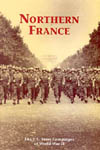
The famous photograph
of American troops before the Arc
de Triomphe, marching in battle
parade down the Champs Elysees,
shows the men of 1st Battalion,
110th Infantry Regiment, 28th Infantry
Division. With no time to rest,
the Division moved on to fight some
of the most bloody battles of the
War the day following the parade.
The advance continued
through the Forest of Compeigne,
La Fere, St. Quentin, Laon, Rethel,
Sedan, Mezieres, Bouillon and eventually
across the Meuse River into Belgium.
The Keystone soldiers averaged 17
miles a day against the resistance
of German "battle groups."
The city of Arlon, Belgium, fell
to a task force as the Division
fanned out into Luxembourg in early
September.
On September 11,
1944, the 28th a small night patrol
of the 109th Infantry Regiment began
the division's protracted struggle
on the Siegfried Line on the Dragon's
teeth fortification infested Westwall.
The patrol crossed the Our River
by bridge from Weiswampach, Luxembourg
into Sevenig, Germany, making it
the first of the Allied armies to
reach German soil.
It began hammering
at the Siegfried Line, 12 September,
destroying pillboxes and other fortifications,
moved north to Elsenborn, 1 October,
then returned on the 6th for patrols
and rotation of troops. The 28th
smashed into the Hurtgen Forest,
2 November 1944, and in the savage
seesaw battle which followed, Vossenack
and Schmidt changed hands several
times.
After hammering
away in assaults which destroyed
or captured 153 pillboxes and bunkers,
the Division moved north toward
the Siegfried Line, clearing the
Monschau Forest of German forces.
The 28th suffered excessive casualties
that autumn in the costly and ill-conceived
Battle of the Hurtgen Forest in
late in late September.
After a brief respite, the Keystone
soldiers made another move northward
to the Huertgen Forest. Five Axis
divisions stormed across the Our River
the first day, followed by four more
in the next few day.
Attacks in the forest began November
2, 1944. The 28th Infantry Division
stormed into Vossenack, Kommerscheidt
and Schmidt amid savage fighting
and heavy losses. By November 10,
the 28th began to move south, where
it held a 25-mile sector of the
front line along the Our River.
It was against this thinly fortified
division line that the Germans unleashed
the full force of their winter Ardennes
"blitzkreig" offensive.
On 19 November, the Division moved
south to hold a 25-mile sector along
the Our River in Luxembourg.
Overwhelmed by the weight of enemy
armor and personnel, the Division
maintained its defense of this sector
long enough to throw Von Runstedt's
assault off schedule. With allied
forces able to a move in to counterattack,
the "Battle of the Bulge"
ensued, inflicting heavy losses
on the enemy forces. Having sustained
a devastating 15,000 casualties,
the 28th withdrew to refortify.
But within three weeks, the Division
was back in action.
Finally, a tenuous line along the
Our and Sauer Rivers was held at
the end of November, only to be
abruptly broken by two Panzer divisions,
three infantry divisions and one
parachute division, including 352nd
Infantry Division and the 5th Parachute
Division, in an infantry-tank attack
on the "Ridge Road" just
west of the Our River on 16 December.
The Rundstedt
offensive was launched in Belgium
on 16 December along the entire
Division front. The 28th fought
in place using all available personnel
and threw off the enemy timetable
before withdrawing to Neufchâteau
on 22 December for reorganization,
as its units had been badly mauled.
The Ardennes Offensive
was launched along the entire divisional
front by the Fifth Panzer Army led
by General der Panzertruppe Hasso
von Manteuffel. The 28th, which
had sustained heavy casualties in
the First Army drive to the Roer,
fought doggedly in place using all
available personnel and threw off
the enemy timetable before withdrawing
to Neufchâteau on 22 December
for reorganization, as its units
had been badly mauled.
By January 1945,
Division soldiers had moved south
where they served with the French
First Army in the reduction of the
"Colmar Pocket." The 109th
Infantry Regiment was awarded the
French Croix de Guerre for its action
which helped lead to the liberation
of Colmar, the last major French
city in German hands.
The Division moved
to a defensive position along the
Meuse River from Givet to Verdun
on 2 January 1945, then to a patrol
of the Vosges Mountains on 17 February.
From 1 to 5 February, it participated
in the reduction of the Colmar Pocket,
headed for the Rhine and crossed
the Rhône–Rhine Canal on 6 February.
By February 23,
1945, the Division returned north
to the American First Army. The
28th was in position along the Olef
River when an attack was launched
on March 6, 1945, carrying the Division
to the Ahr River. Schleiden, Germund,
Kall, Sotenich, Sistig and Blankenheim
all fell in a raid advance.
After an attack
toward the Ahr River on 6 March,
the 28th engaged in training, rehabilitation,
and holding defensive positions.
Beginning on 7 April it performed
occupation duties at Juelich and
Kaiserslautern until it left France.
By early April,
the Division moved west of the Rhine
and took up occupation duties in
the area north of Aachen along the
Holland-German border. Permanent
occupation came two weeks later
at the Saurland and Rhonish areas.
In early July 1945,
the 28th began its redeployment
to the U.S. The Division was deactivated
on December 13, 1945.
|
|
|
109th Infantry Regiment
History
The 109th Regiment
served across France and through
the Hurtgen Forest of Germany;
elements of the Regiment led
the Division into the Rhineland
to become the first troops to
invade German soil since Napoleon.
The 109th Infantry
won battle honors at Normandy,
Northern France, Ardennes-Alsace,
the Rhineland and Central Europe
and they were honored with the
Luxemburg Croix de Guerre and
the French Croix de Guerre for
action at Colmar. Eddie Slovik,
a member of this regiment was
the only American soldier executed
for desertion in the 20th century.
The regiment
was federalized in 1941, at
which time it became a Regimental
Combat Team and was sent to
France to be tested on the bloody
battlefields of World War II.
The men of the 109th battled
across France and through the
Hurtgen Forest of Germany; elements
of the Regiment led the Division
into the Rhineland to become
the first troops to invade German
soil since Napoleon.
The 109th Infantry
paid with human life and blood
as they won battle honors at
Normandy, Northern France, Ardennes-Alsace,
the Rhineland and Central Europe
and they were honored with the
Luxemburg Croix de Guerre and
the French Croix de Guerre for
action at Colmar.
The most noteworthy
of the 109th Infantry's achievements
during World War II came while
the Regiment was resting in
the Ardennes sector — considered
a quiet sector early in December,
1944.
It was then
that von Rundstedt launched
his vicious, well planned Battle
of the Bulge. The unsuspecting
109th Infantry was hit by an
entire Yolks Grenadier Guard
Division as well as elements
of a panzer division, parachute
division and other crack German
units.
Although suffering
great losses, (so great were
the losses that the Division
became known as the "Bloody
Bucket Division" by the
Germans who saw so many of our
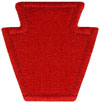
wounded troops wearing the red
Keystone patch) in three days
of bitter fighting, the 109th
Infantry completely destroyed
the 352d Yolks Grenadiers, at
the same time holding its own
tactical unity.
Technical Sergeant
Francis J. Clark of Company
K, earned the Medal of Honor
while serving with the 109th
Infantry on 12 September 1944
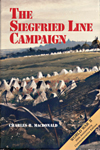
during the Siegfried Line Campaign.
The 109th had
blocked von Rundstedt in the
North and doomed the German
offensive in the Ardennes. When
the tide of battle turned on
Christmas Eve, the battle-weary
109th soldiers attacked, threw
the enemy across the Sure River,
and retook several towns on
the original front. Then started
the drive into Germany and the
final Allied push of World War
II.
|
|
|
110th Infantry Regiment
History
The 110th Infantry
Regiment, 28th Infantry Division,
on 16 December 1944, held the
center sector of the defensive
zone of the division and VIII
Corps in the Ardennes.
Here it lay
astride the main attack axis
of the German LXVII Panzer Corps
of the Fifth Panzer Army headed
to Bastogne, Belgium, and points
west. Vastly outnumbered and
outgunned by the attacking German
force, the 110th Infantry put
up one of the classic defensive
stands in American military
history.
The officers
and men of the 110th Infantry
bought the precious time needed
for the 101st Airborne Division
to be trucked into the vital
crossroads town of Bastogne
and consolidate its defenses
with elements of the 9th and
10th Armored Divisions and miscellaneous
remnants of the 28th Infantry
Division and VIII Corps.
The 110th Infantry
Regiment received a Distinguished
Unit Citation for its actions
from 16 through 23 December
1944 during the German Ardennes
offensive.
|
|
|
112th
Infantry Regiment History
The
regiment was called to active
federal service on 17 February
1941, 10 months prior to the attack
on Pearl Harbor.
After years of
training, the unit first entered
the continent of Europe on the
Normandy beaches following the
D-Day landing.
It became the
112th Infantry Regimental Combat
Team which consisted of the 112th
Infantry Regiment, the 229th Field
Artillery Battalion, the 103rd
Engineer Battalion, Company C,
447th Antiaircraft Artillery Battalion,
and Company C, 630th Tank Destroyer
Battalion.
28th Division
commander James E. Wharton was
in his first day of command when
a German sniper shot him while
he was at the 112th Infantry's
command post.
The regiment plowed
through France and Germany, participating
in the capture of Paris and the
bitter fighting in the Huertgen
Forest. During December 1944,
the 112th Infantry Regimental
Combat Team was holding a 6-1/2
mile long sector which the Germans
attacked with nine Divisions.
The Combat Team
inflicted 1600 casualties and
destroyed eighteen tanks during
nine days of continuous action,
that was later known as the Battle
of the Bulge.
The regiment was
awarded battle streamers marked
Normandy, Northern France, Ardennes-Alsace,
Rhineland, and Central Europe
for its service in World War II.
The unit was also awarded the
Distinguished Unit Citation for
its actions during the Battle
of the Bulge, from 16 to 24 December
1944.
The unit was mustered
out of federal service on 6 December
1945 at Camp Gordon, Georgia.
|
|
|
Campaigns
of World War II
|
Normandy |
6 Jun - 24 Jul 44 |
|
North
France |
25 Jul - 14 Sep 44 |
|
Rhineland |
15 Sep
44 - 21 Mar 45 |
|
Ardennes-Alsace |
16 Dec
44 - 25 Jan 45 |
|
Central
Europe |
22 Mar
- 11 May 45 |
.
Normandy
6 Jun - 24 Jul 44
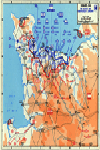
A great invasion
force stood off the Normandy coast
of France as dawn broke on 6 June
1944: 9 battleships, 23 cruisers,
104 destroyers, and 71 large landing
craft of various descriptions
as well as troop transports, mine
sweepers, and merchantmen—in all,
nearly 5,000 ships of every type,
the largest armada ever assembled.
The naval bombardment
that began at 0550 that morning
detonated large minefields along
the shoreline and destroyed a
number of the enemy’s defensive
positions. To one correspondent,
reporting from the deck of the
cruiser HMS Hillary, it sounded
like “the rhythmic beating of
a gigantic drum” all along the
coast.
In the hours following
the bombardment, more than 100,000
fighting men swept ashore to begin
one of the epic assaults of history,
a “mighty endeavor,” as President
Franklin D. Roosevelt described
it to the American people, “to
preserve. . . our civilization
and to set free a suffering humanity.”
North
France
25 Jul - 14 Sep 44
As July 1944 entered
its final week, Allied forces
in Normandy faced, at least on
the surface, a most discouraging
situation. In the east, near Caen,
the British and Canadians were
making little progress against
fierce German resistance.
In the west, American
troops were bogged down in the
Norman hedgerows. These massive,
square walls of earth, five feet
high and topped by hedges, had
been used by local farmers over
the centuries to divide their
fields and protect their crops
and cattle from strong ocean winds.
The Germans had
turned these embankments into
fortresses, canalizing the American
advance into narrow channels,
which were easily covered by antitank
weapons and machine guns.
The stubborn
defenders were also aided by some
of the worst weather seen in Normandy
since the turn of the century,
as incessant downpours turned
country lanes into rivers of mud.
By 25 July, the
size of the Allied beachhead had
not even come close to the dimensions
that pre–D-day planners had anticipated,
and the slow progress revived
fears in the Allied camp of a
return to the static warfare of
World War I.
Few would have
believed that, in the space of
a month and a half, Allied armies
would stand triumphant at the
German border.
Rhineland
15 Sep 44 - 21 Mar 45
The Rhineland
Campaign, although costly for
the Allies, had clearly been ruinous
for the Germans. The Germans suffered
some 300,000 casualties and lost
vast amounts of irreplaceable
equipment.
Hitler, having
demanded the defense of all of
the German homeland, enabled the
Allies to destroy the Wehrmacht
in the West between the Siegfried
Line and the Rhine River. Now,
the Third Reich lay virtually
prostrate before Eisenhower’s
massed armies.
Ardennes
- Alsace Campaign
16 Dec 44 - 25 Jan 45
In August 1944,
while his armies were being destroyed
in Normandy, Hitler secretly put
in motion actions to build a large
reserve force, forbidding its
use to bolster Germany’s beleaguered
defenses. To provide the needed
manpower, he trimmed existing
military forces and conscripted
youths, the unfit, and old men
previously untouched for military
service during World War II.
In September Hitler
named the port of Antwerp, Belgium,
as the objective. Selecting the
Eifel region as a staging area,
Hitler intended to mass twenty-five
divisions for an attack through
the thinly held Ardennes Forest
area of southern Belgium and Luxembourg.
Once the Meuse
River was reached and crossed,
these forces would swing northwest
some 60 miles to envelop the port
of Antwerp. The maneuver was designed
to sever the already stretched
Allied supply lines in the north
and to encircle and destroy a
third of the Allies’ ground forces.
If successful, Hitler believed
that the offensive could smash
the Allied coalition, or at least
greatly cripple its ground combat
capabilities, leaving him free
to focus on the Russians at his
back door.
Central
Europe Campaign
22 March - 11 May 1945
By the beginning
of the Central Europe Campaign
of World War II, Allied victory
in Europe was inevitable. Having
gambled his future ability to
defend Germany on the Ardennes
offensive and lost, Hitler had
no real strength left to stop
the powerful Allied armies. Yet
Hitler forced the Allies to fight,
often bitterly, for final victory.
Even when the
hopelessness of the German situation
became obvious to his most loyal
subordinates, Hitler refused to
admit defeat. Only when Soviet
artillery was falling around his
Berlin headquarters bunker did
the German Fuehrer begin to perceive
the final outcome of his megalomaniacal
crusade. |
|
|
For
Mac or PC computer use. A monograph is a work of
writing or essay or book on a specific subject and
may be released in the manner of a book or journal
article. Files copied from books and the National
Archives and are 'as is' and may be incomplete or
unreadable in parts.
For Special Requests or more information about this
or any of my other "Researching WWII" CDs like it,
please email me at Hello@MtMestas.com
. |
|