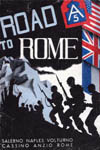
|
|
Researching
World War II
Unit
Histories, Documents
Monographs, Books and Reports on CD
PDF Remastered and Keyword Searchable
|
|
|
|
| 36th
Infantry Division
in WWII
These
Books, Booklets and
Monographs
are on This CD |
*A monograph is a work of writing of essay
or book on a specific subject and may be
released in the manner of a book or journal
article. |
|
Order
of Battle
|
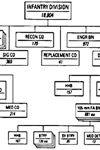
Headquarters
and Headquarters Company
141st Infantry Regiment
142nd Infantry Regiment
143rd Infantry Regiment
442nd Infantry Regiment (attached
Oct - Nov 44)
36th Infantry Division Artillery
131st Field Artillery Battalion
(105mm)
132nd Field Artillery Battalion
(105mm)
133rd Field Artillery Battalion
(105mm)
155th Field Artillery Battalion
(155mm)
36th Reconnaissance Troop
(Mechanized)
111th Engineer Combat Battalion
111th Medical Battalion
36th Infantry Division Military
Police Platoon
36th Infantry Division Special
Troops
36th Quartermaster Company
36th Signal Company
736th Ordnance Light Maintenance
Company
36th Counter Intelligence
Corps Detachment
|
Casualties
Killed -
1,523
Killed in action - 3,131
Wounded in action - 13,191
Died of
wounds - 506
|
Campaigns
| Naples
- Foggia |
9
Sep 43 - 21 Jan 44 |
| Anzio |
22
Jan - 24 May 44 |
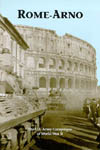
| Rome
- Arno |
22
Jan - 9 Sep 44 |
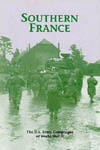
| Southern
France |
15
Aug - 14 Sep 44 |
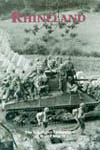
| Rhineland |
15
Sept 44 - 21 Mar 45 |
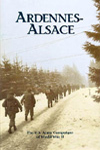
| Ardennes
- Alsace |
16
Dec 44 - 25 Jan 45 |
| Central
Europe |
22
Mar - 11 May 45 |
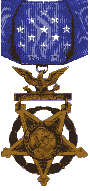
Medals
Medal of
Honor - 14
Distinguished Service Crosses
- 80
Distinguished Service Medals
- 2
Silver Stars - 2,354
Legion of Merit Medals -
49
Soldier's Medals - 77
Bronze Star Medals - 5,407
Air Medals - 88
|
Medal of Honor
Recepients
Bernard
P. Bell, T/Sgt.
142nd Infantry Regiment
- Company I
Mittelwihr, France
18 December 1944
Arnold
L. Bjorklund, 1st Lt.
36th Infantry Division
nr. Altavilla, Italy
September 13, 1943
Charles
H. Coolidge, T/Sgt.
141st Infantry Regiment
- Company M
Belmont sur Buttant, France
October 24 - 27, 1944
Morris
E. Crain, T/Sgt.
141st InfantryRegiment -
Company E
Haguenau, France
March 13, 1945
William
J. Crawford, Pvt.
36th Infantry Division
nr. Altavilla, Italy
September 13, 1943
Edward
C. Dahlgren, Sgt.
142nd Infantry Regiment
- Company E
Oberhoffen, France
February 11, 1945
Emile
Deleau, Jr., Sgt.
142nd Infantry Regiment
- Company A
Oberhoffen, France
February 12, 1945
Stephen
R. Gregg, 2nd Lt.
143rd Infantry Regiment
nr. Montelimar, France
August 27, 1944
Silvestre
S. Herrera, Pfc.
142nd Infantry Regiment
- Company E
nr. Mertzwiller, France
March 15, 1945
Charles
E. Kelly, Cpl.
143rd Infantry Regiment
- Company L
nr. Altavilla, Italy,
September 13, 1943
James
M. Logan, Sgt.
36th Infantry Division
nr. Salerno, Italy
September 9, 1943
Thomas
E. McCall, S/Sgt.
143rd Infantry Regiment
- Company F
nr. San Angelo, Italy
January 22, 1944
Ellis
R. Weicht, Sgt.
142nd Infantry Regiment
- Company F
St. Hippolyte, France
December 3, 1944
Homer
L. Wise, S/Sgt.
142nd Infantry Regiment
- Company L
Magliano, Italy
June 14, 1944
|
|
|
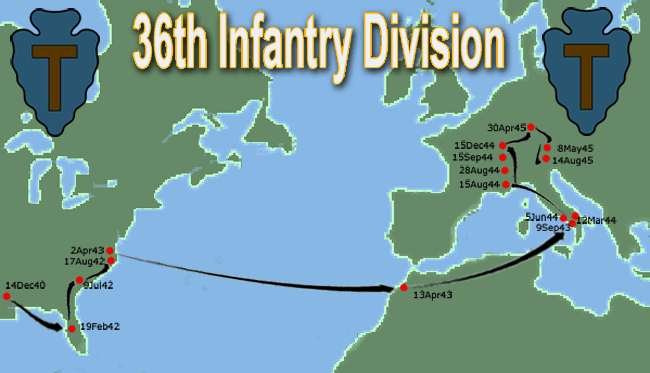
| 1940 |
|
25
Nov- |
The
36th was called up Active Federal
Service at San Antonio, Texas. |
14
Dec- |
The
Division departed for its Mobilization
Station at Camp Bowie, Texas. |
1941 |
|
1
Jun- |
The
36th moved to Brownwood, Texas where
it participated in the VIII Corps
Brownwood Maneuvers. |
13
Jun- |
The
Division returned to Camp Bowie. |
Aug- |
The
Division moved to Mansfield, Louisiana,
and took part in Louisiana Maneuvers
Aug. and Sep. |
2
Oct- |
The Division returned to Camp Bowie. |
1942 |
|
1
Feb- |
The
Division was reorganized into a Triangular
Infantry Division. |
19
Feb- |
The
Division moved to Camp Blanding, Florida. |
9
Jul- |
The
Division participated in the Carolina
Maneuvers till 15Aug. |
17
Aug- |
The
Division was Staged at Camp Edwards,
Massachusetts for its Port Call. |
| 1943 |
|
2
Apr- |
The
Division departed the New York Port
of Embarkation for North Africa. |
13
Apr- |
The
36th Infantry Division landed in North
Africa and trained at Arzew and Rabat.
|
9
Sep- |
The
Division first saw action,when it
landed by sea at Paestum on the Gulf
of Salerno against intense German
opposition. |
12
Sep- |
The
Germans launched counterattacks but
the 36th repulsed them with the aid
of air support and naval gunfir and
advanced slowly, securing the area
from Agropoli to Altavilla. |
15
Nov- |
After
a brief rest the 36th returned to
combat the 36th captured Mount Maggiore,
Mount Lungo, and the village of San
Pietro despite strong enemy positions
and severe winter weather. |
1944 |
|
1
Jan- |
This
grueling campaign was marked by futile
attempts to establish a secure bridgehead
across the Rapido River until 8 Feb. |
12
Mar- |
After
assisting the 34th Division in the
attack on Cassino and fighting defensively
along the Rapido River, the severely
depleted 36th withdrew for rest and
rehabilitation. |
25
May- |
The
Division was sent by sea to the Anzio
bridgehead to take part in Operation
Diadem. |
1
Jun- |
The
36th drove north to capture Velletri.
|
5
Jun- |
The
Division entered Rome. |
26
Jun- |
Pushing
up from Rome, the 36th encountered
sharp resistance at Magliano, but
reached Piombino before moving back
to Paestum for rest and rehabilitation. |
15
Aug- |
As
part of the American 6th Army Group,
the Division made another amphibious
assault landing, against light opposition
in the Saint-Raphaël-Fréjus
area of Southern France as part of
Operation Dragoon. |
28
Aug- |
Montelimar
fell and large German units were trapped.
|
15
Sep- |
The
Division was attached to the French
First Army and advanced to the Moselle
River at Remiremont and the foothills
of the Vosges. In a grinding offensive,
the Division crossed the Meurthe River,
breached the Ste. Marie Pass and burst
into the Alsatian Plains. |
13
Dec- |
The
enemy counterattacked but the 36th
held the perimeter of the Colmar Pocket.
|
15
Dec- |
The
Division was released from attachment
to the First French Army, and returned
to the control of VI Corps. |
20
Dec- |
The
Division resumed the attack, advancing
northward along the Rhine River to
Mannheim meeting heavy resistance
at Haguenau, Oberhofen, and Wissembourg.
In this action Company "G"
143rd Infantry Regiment gained a Presidential
Unit Citation. |
| 27
Dec- |
The
Division was reassigned to XXI Corps.
|
30
Dec- |
The
Division returned to Seventh Army
Reserve and was taken out of the line
for the first time since it had landed
in the south of France. |
1945 |
|
3
Jan- |
The
Division was reassigned to XV Corps.
|
18
Jan- |
The
Division was reassigned to VI Corps.
|
Mar-
|
The
Division returned to the line early
March. |
29
Mar- |
The
36th was reassigned to the Seventh
Army. |
22
Apr- |
The
Division moved to the Danube River. |
27
Apr- |
The
Division was reassigned to the XXI
Corps. |
30
Apr- |
The
Division attacked the "National
Redoubt" at Künzelsau. |
8
May- |
The
division was based in Kitzbuhel, Austria
where it captured Field Marshall Gerd
Von Runstedt, the commander of all
German army forces on the Western
front. |
14
Aug- |
The
Division's final station was at Kufstein,
Austria. |
Dec-
|
After
400 days of combat, the 36th Infantry
Division returned to the United States.
|
15
Dec- |
The
Division was returned to the Texas
Army National Guard. |
|
|
|
|
36th
Infantry Division
in World War II
CD
1
Open all files from
the folders on the CDs
Install Adobe
Acrobat PDF Reader from CD 1 |
|
|
|
|
36th Infantry Division
History
The
36th Infantry Division was originally
activated as the 15th Division,
a Army National Guard Division from
Texas and Oklahoma. The designation
was changed to the 36th Division
in 1917, possibly in July. The unit
was sent to Europe in July 1918
and conducted major operations in
the Meuse-Argonne Offensive. During
World War I, the division suffered
2,584 casualties consisting of 466
killed in action, and 2,118 wounded
in action. The unit was inactivated
in June 1919.
The 36th was called up again for
Active Federal Service on 25 November,
1940 at San Antonio, Texas. The
Division loaded all of its equipment,
Mustered its personnel, and departed
for its Mobilization Station at
Camp Bowie, Texas on 14 December.
The 36th moved to Brownwood, Texas
on 1 June 1941, where it participated
in the VIII Corps Brownwood Maneuvers
until 13 June. The Division then
returned to Camp Bowie.
The Division then
moved to Mansfield, Louisiana, and
took part in both the August and
September 1941 Louisiana Maneuvers.
The Division then returned to Camp
Bowie on 2 October where it was
reorganized into a Triangular Infantry
Division on 1 Feb 1942.
The Division then
moved to Camp Blanding, Florida
on 19 February, and participated
in the Carolina Maneuvers between
9 July and15 August. The Division
then was Staged at Camp Edwards,
Massachusetts on 17 August for its
Port Call.
The Division departed
the New York Port of Embarkation
on 2 April, 1943 for North Africa.
Combat
Chronicle
The 36th Infantry Division landed
in North Africa 13 April, 1943 and
trained at Arzew and Rabat. It was
Assigned to the VI Corps, Seventh
Army, but attached to SOS, NATOUSA,
for supply. The Division first saw
action, 9 September when it landed
by sea at Paestum on the Gulf of
Salerno against intense German opposition.
The Germans launched counterattacks
on September 12-14, but the 36th
repulsed them with the aid of air
support and naval gunfire, and advanced
slowly, securing the area from Agropoli
to Altavilla.
After a brief rest
the 36th returned to combat, 15
November. It captured Mount Maggiore,
Mount Lungo, and the village of
San Pietro despite strong enemy
positions and severe winter weather.
This grueling campaign was marked
by futile attempts to establish
a secure bridgehead across the Rapido
River, 1 January to 8 February,
1944. After assisting the 34th Division
in the attack on Cassino and fighting
defensively along the Rapido River,
the severely depleted 36th withdrew,
12 March for rest and rehabilitation.
On 25 May the Division was sent
by sea to the Anzio bridgehead to
take part in Operation Diadem. It
drove north to capture Velletri
1 June and entered Rome on the 5th.
Pushing up from Rome, the 36th encountered
sharp resistance at Magliano, but
reached Piombino, 26 June before
moving back to Paestum for rest
and rehabilitation.
On 15 August, as
part of the American 6th Army Group,
the division made another amphibious
assault landing, against light opposition
in the Saint-Raphaël-Fréjus
area of Southern France as part
of Operation Dragoon. A rapid advance
opened the Rhone River Valley. Montelimar
fell 28 August and large German
units were trapped. On 15 September
the Division was attached to the
French First Army. The 36th advanced
to the Moselle River at Remiremont
and the foothills of the Vosges.
In a grinding offensive, the Division
crossed the Meurthe River, breached
the Ste. Marie Pass and burst into
the Alsatian Plains. The enemy counterattacked
13 December but the 36th held the
perimeter of the Colmar Pocket.
On 15 December the Division was
released from attachment to the
First French Army, and returned
to the control of VI Corps. The
German Army counterattacks out of
the Colmar Pocket were so fierce,
that at times, the field artillery
was forced to fire over open sights,
at point blank range to stop them.
On 20 December the Division resumed
the attack, advancing northward
along the Rhine River to Mannheim
meeting heavy resistance at Haguenau,
Oberhofen, and Wissembourg. In this
action Company "G" 143rd
Infantry Regiment gained a Presidential
Unit Citation. On 27 December the
Division was reassigned to XXI Corps,
and the Division was pinched out
and returned to Seventh Army Reserve
on 30 December.
The Division was
taken out of the line for the first
time since it had landed in the
south of France. On 3 January, 1945
the Division was reassigned to XV
Corps. On 18 January the Division
was reassigned to VI Corps. It returned
to the line early March. The 36th
was reassigned to the Seventh Army
on 29 March, and moved to the Danube
River on 22 April. It was reassigned
to the XXI Corps on 27 April and
attacked the "National Redoubt"
at Künzelsau on the 30th. The
36th has been recognized by the
United States Holocaust Memorial
Museum as a liberating unit for
their work securing the subcamps
of the Dachau concentration camp
system. By 8 May the division was
based in Kitzbuhel, Austria where
it captured Field Marshall Gerd
Von Runstedt, the commander of all
German army forces on the Western
front, and it’s final station
was at Kufstein, Austria on 14 August,
1945.
After 400 days of
combat, the 36th Infantry Division
returned to the United States in
December 1945. It was returned to
the Texas Army National Guard on
15 December, 1945.
|
|
|
| 36th
Infantry Division
Campaigns of World War II
| Naples-Foggia |
9
Sep 43 - 21 Jan 44 |
| Anzio |
22
Jan - 24 May 44 |
| Rome-Arno |
22
Jan - 9 Sep 44 |
| Southern
France |
15
Aug - 14 Sep 44 |
| Rhineland |
15
Sept 44 - 21 Mar 45 |
| Ardennes-Alsace |
16
Dec 44 - 25 Jan 45 |
| Central
Europe |
22
Mar - 11 May 45 |
Naples
- Foggia
9 Sep 43 - 21 Jan 44
After Allied bombardment
of communications and airfields
in Italy, Montgomery crossed the
Strait of Messina on 3 September
1943 and started northward. Five
days later Eisenhower announced
that the Italian Government had
surrendered. Fifth Army, under
Clark, landed at Salerno on g
September and managed to stay
despite furious counterattacks.
By 18 September the Germans were
withdrawing northward. On 27 September
Eighth Army occupied the important
airfields of Foggia, and on I
October Fifth Army took Naples.
As the Allies pushed up the peninsula,
the enemy slowed the advance and
brought it to a halt at the Gustav
Line.
Anzio
22 Jan - 24 May 44
The four months
of this campaign would see some
of the most savage fighting of
World War II.
Following the
successful Allied landings at
Calabria, Taranto, and Salerno
in early September 1943 and the
unconditional surrender of Italy
that same month, German forces
had quickly disarmed their former
allies and begun a slow, fighting
withdrawal to the north. Defending
two hastily prepared, fortified
belts stretching from coast to
coast, the Germans significantly
slowed the Allied advance before
settling into the Gustav Line,
a third, more formidable and sophisticated
defensive belt of interlocking
positions on the high ground along
the peninsula’s narrowest
point.
During the four
months of the Anzio Campaign the
Allied VI Corps suffered over
29,200 combat casualties (4,400
killed, 18,000 wounded, 6,800
prisoners or missing) and 37,000
noncombat casualties. Two-thirds
of these losses, amounting to
17 percent of VI Corps’
effective strength, were inflicted
between the initial landings and
the end of the German counteroffensive
on 4 March. Of the combat casualties,
16,200 were Americans (2,800 killed,
11,000 wounded, 2,400 prisoners
or missing) as were 26,000 of
the Allied noncombat casualties.
German combat losses, suffered
wholly by the Fourteenth Army,
were estimated at 27,500 (5,500
killed, 17,500 wounded, and 4,500
prisoners or missing), figures
very similar to Allied losses.
The Anzio Campaign
continues to be controversial,
just as it was during its planning
and implementation stages. The
operation, according to U.S. Army
Center of Military History historian
Clayton D. Laurie, clearly failed
in its immediate objectives of
outflanking the Gustav Line, restoring
mobility to the Italian campaign,
and speeding the capture of Rome.
Yet the campaign
did accomplish several goals.
The presence of a significant
Allied force behind the German
main line of resistance, uncomfortably
close to Rome, represented a constant
threat. The Germans could not
ignore Anzio and were forced into
a response, thereby surrendering
the initiative in Italy to the
Allies. The 135,000 troops of
the Fourteenth Army surrounding
Anzio could not be moved elsewhere,
nor could they be used to make
the already formidable Gustav
Line virtually impregnable.
Rome
- Arno
22 Jan - 9 Sep 44
The Allied operations
in Italy between January and September
1944 were essentially an infantryman’s
war where the outcome was decided
by countless bitterly fought small
unit actions waged over some of
Europe’s most difficult
terrain under some of the worst
weather conditions found anywhere
during World War II.
Southern
France
15 Aug - 14 Sep 44
The Allied invasion
of southern France in the late
summer of 1944, an operation first
code-named ANVIL and later DRAGOON,
marked the beginning of one of
the most successful but controversial
campaigns of World War II. However,
because it fell both geographically
and chronologically between two
much larger Allied efforts in
northern France and Italy, both
its conduct and its contributions
have been largely ignored. Planned
originally as a simultaneous complement
to OVERLORD, the cross-Channel
attack on Normandy, ANVIL actually
took place over two months later,
on 15 August 1944, making it appear
almost an afterthought to the
main Allied offensive in northern
Europe. Yet the success of ANVIL
and the ensuing capture of the
great southern French ports of
Toulon and Marseille, together
with the subsequent drive north
up the Rhone River valley to Lyon
and Dijon, were ultimately to
provide critical support to the
Normandy-based armies finally
moving east toward the German
border.
Rhineland
15 Sep 44 - 21 Mar 45
The Rhineland
Campaign, although costly for
the Allies, had clearly been ruinous
for the Germans. The Germans suffered
some 300,000 casualties and lost
vast amounts of irreplaceable
equipment. Hitler, having demanded
the defense of all of the German
homeland, enabled the Allies to
destroy the Wehrmacht in the West
between the Siegfried Line and
the Rhine River. Now, the Third
Reich lay virtually prostrate
before Eisenhower’s massed
armies.
Ardennes
- Alsace
16 Dec 44 - 25 Jan 45
In August 1944,
while his armies were being destroyed
in Normandy, Hitler secretly put
in motion actions to build a large
reserve force, forbidding its
use to bolster Germany’s
beleaguered defenses. To provide
the needed manpower, he trimmed
existing military forces and conscripted
youths, the unfit, and old men
previously untouched for military
service during World War II.
In September Hitler
named the port of Antwerp, Belgium,
as the objective. Selecting the
Eifel region as a staging area,
Hitler intended to mass twenty-five
divisions for an attack through
the thinly held Ardennes Forest
area of southern Belgium and Luxembourg.
Once the Meuse River was reached
and crossed, these forces would
swing northwest some 60 miles
to envelop the port of Antwerp.
The maneuver was designed to sever
the already stretched Allied supply
lines in the north and to encircle
and destroy a third of the Allies’
ground forces. If successful,
Hitler believed that the offensive
could smash the Allied coalition,
or at least greatly cripple its
ground combat capabilities, leaving
him free to focus on the Russians
at his back door.
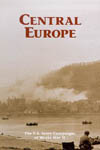
Central Europe
22 Mar - 11 May 45
By the beginning
of the Central Europe Campaign
of World War II, Allied victory
in Europe was inevitable. Having
gambled his future ability to
defend Germany on the Ardennes
offensive and lost, Hitler had
no real strength left to stop
the powerful Allied armies. Yet
Hitler forced the Allies to fight,
often bitterly, for final victory.
Even when the hopelessness of
the German situation became obvious
to his most loyal subordinates,
Hitler refused to admit defeat.
Only when Soviet artillery was
falling around his Berlin headquarters
bunker did the German Fuehrer
begin to perceive the final outcome
of his megalomaniacal crusade.
|
|
|
For Mac or PC computer use. A monograph
is a work of writing or essay or book on a specific
subject and may be released in the manner of a book
or journal article. Files copied from books and
the National Archives and are 'as is' and may be
incomplete or unreadable in parts. For Special Requests
or more information about this or any of my other
"Researching WWII" CDs like it, send an email to
Hello@MtMestas.com . |
| |